
How do I know if I’m entitled to compensation? 7 signs to look for
Most people don’t spend much time thinking about the cables, poles and electricity equipment around their home until a letter arrives or work starts nearby. But if electricity…


The use of underground cables is more common in the distribution of electricity. In the areas where the National Grid is a DNO (the Midlands, south-west and south Wales) the network is made up of 60,000 miles of overhead line and 83,900 miles of underground cables.
Regional DNOs have differing levels of underground cables, varying by location and voltage.
We can only give an approx location however, you can also access this information, for your property on Line Search Before You Dig.
Any agreement that is forthcoming will include a location plan showing the cable route.
For your case to be successful, it must meet this minimum criteria:
For a low voltage case, once we determine there is a live claim we submit this to the DNO for review.
They will ready a wayleave agreement these are usually termed agreements between 14 – 30 years. You can find out more about wayelaves in our blog post here.
For a high voltage case, once we determine there is a live claim we submit this to the DNO for review
We then negotiate the claim and agree the fee in principle with them, once this is accepted by the property owner
It will then go through a legal process to ready the deed of easement/servitude
Once review by our team and determined there is a claim, and whether it is low voltage (less than 1,000 volts, typically 240 volts) or high voltage (more than 1,000 volts) and depending on the Distribution Network
The process for low voltage typically takes 6 – 9 months.
The process for high voltage typically takes 12 – 18 months.
We work on a contingent only success basis. This means that, if we’re not successful in getting the network operator to agree that a payment is due to you, we’ll close our file free of charge.
If your case is low voltage only, we dont charge a fee. This is because our fee for these cases if paid by the Network Operator on your behalf.
If your case includes high voltage equipment, our fee is calculated as 20%+VAT of the money you receive.
Disclaimer: The information in this blog post was accurate at the time of publishing. However, laws, regulations, and best practices may change over time. We do our best to keep our content up to date, but we cannot guarantee that all information remains current or correct. This blog post is for general information only and should not be taken as legal, financial, or professional advice. If you are unsure about anything, please contact us or seek professional guidance before making any decisions.
Most people don’t spend much time thinking about the cables, poles and electricity equipment around their home until a letter arrives or work starts nearby. But if electricity…
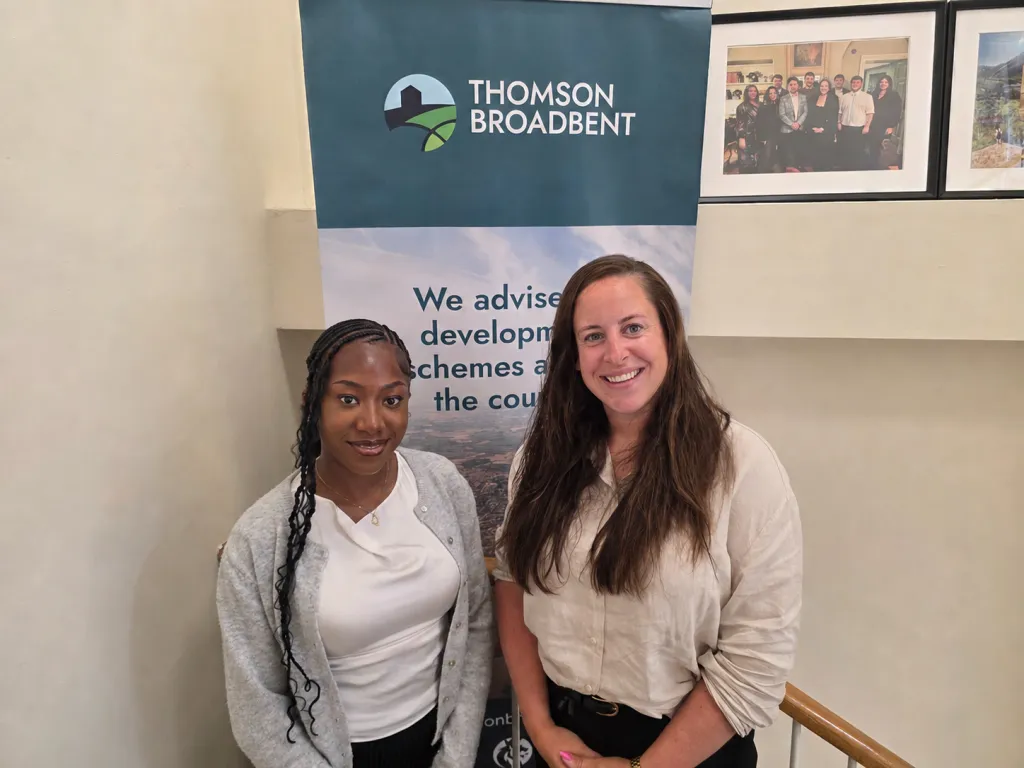
As Thomson Broadbent continues to grow during its 30th year, we’re delighted to welcome two new members of staff to the business. Laura Dike has joined us as…
What is a Consents Officer? Our Consents Officer play a crucial role in processing consent applications under relevant legislation. Specifically, in our context, this role involves ensuring that…
Whether you’ve received a letter from us or have a question about electricity equipment on your property, our team can help you understand the next step.